Hotel Pre-Arrival Email Template That Converts


The Pre-Arrival Email Your Hotel Should Be Sending (But Probably Isn't)
TL;DR
Most hotels go silent after the booking confirmation, leaving the entire pre-arrival window — when guests are actively planning their trip — completely unaddressed. That silence is a missed opportunity to capture a guest's direct email and reduce dependency on OTAs. Khonsu's white-labeled Trip Planner gives hotels something genuinely valuable to offer during that window: a branded tool guests use to build their own itinerary — unmasking real gust contact information in the process, and reducing OTA dependency.
{{ad-three}}
The Real Cost of OTA Dependency
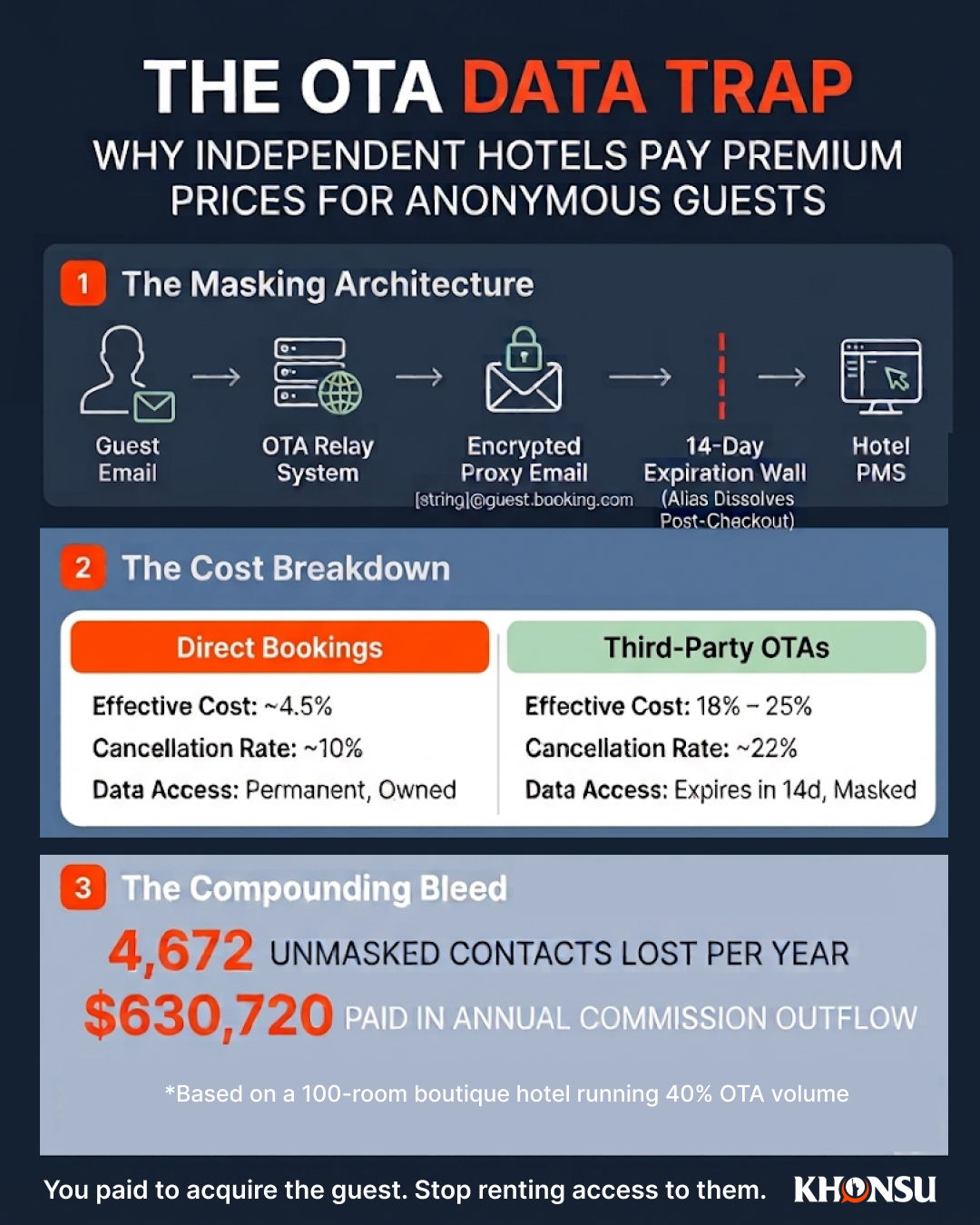
OTA dependency is not primarily a distribution problem. It is a demand-origin problem.
As a hotelier, you control the experience. But the platform controls the introduction. Every guest who arrives through an OTA was first introduced to your property by someone else's system — at someone else's price point, surrounded by competing hotels you had no influence over.
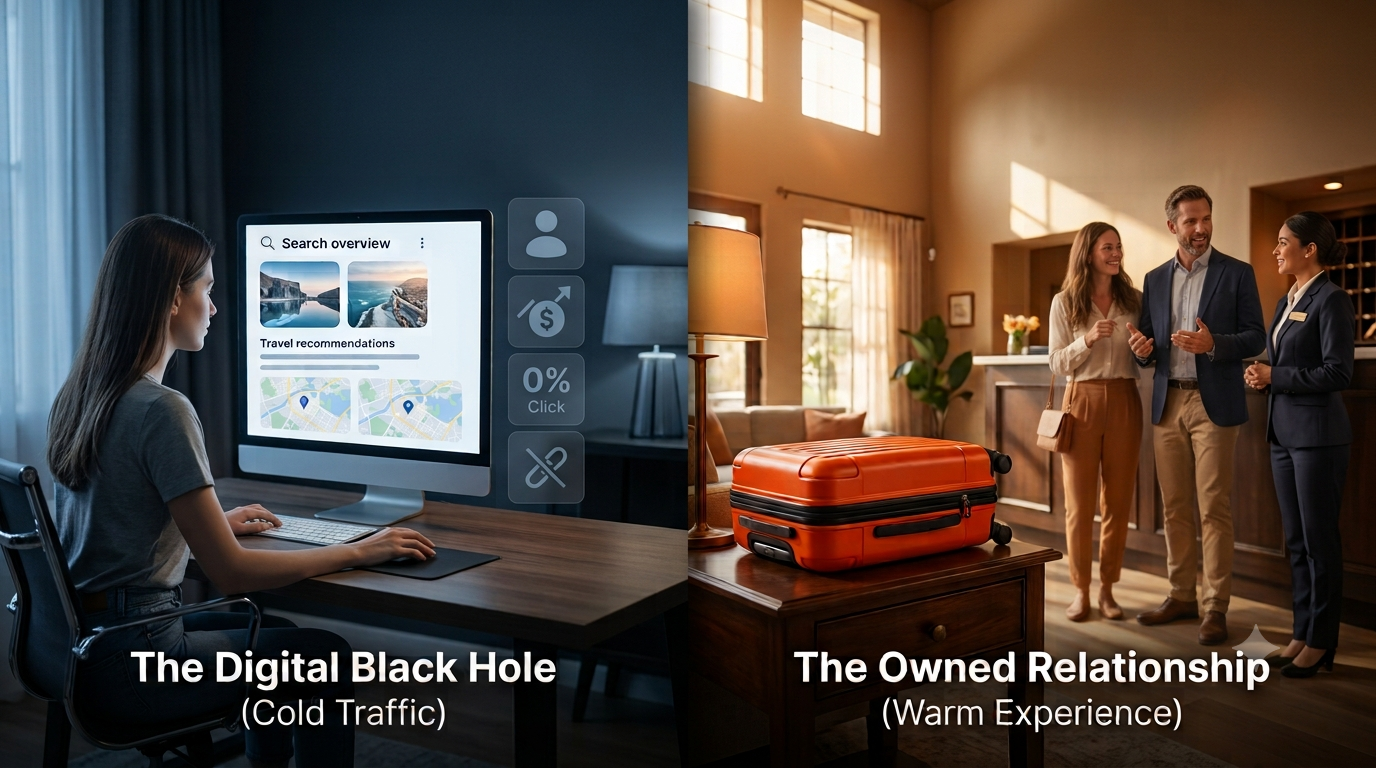
Email marketing is routinely cited as one of the most powerful tools for reducing OTA dependence. But its effectiveness depends entirely on what it is activating. When a hotel owns the guest relationship, email deepens it. When a hotel does not own the guest relationship, email merely manages one that someone else originated. That distinction separates the properties making measurable progress on direct bookings from those running sophisticated email programs while their OTA commission line keeps rising. If you want to change the relationship, you have to change when the conversation begins.
Every week, hotel marketing teams across the globe press send on thousands of automated emails that look exactly like this:
Subject: Confirmation for Reservation #849204 – The Grandview Hotel
Dear Guest,
We look forward to welcoming you to The Grandview Hotel. Please review your booking details below:
* Check-in: 4:00 PM
* Check-out: 11:00 AM
* Cancellation Policy: Non-refundable within 48 hours of arrival.
* Parking: Valet parking available for $65/night.
Upgrade Your Stay: Want a better view? Upgrade to a Deluxe King Room for an additional $45/night. Add our Continental Breakfast Buffet for $28 per person, per day.
Please note that a valid credit card and government-issued ID must be presented at check-in. A $100/night incidental hold will be placed on your card.
Safe travels, The Grandview Management Team
This isn't hospitality. It's bureaucracy.
That email treats an excited traveler like an incoming operational hazard — forcing them to think about restrictions and incidental holds at the exact moment their anticipation is at its highest. There is a major opportunity being wasted here. The opportunity to establish a real relationship with your guest, capture their direct email, and begin breaking the OTA's hold — before they ever arrive.
💡 But without being given the email, you don't own the realtionship. And if you don't own the realtionship you can't drive the conversation.
{{ad-one}}
If You Want To Get, You Have To Give
Most property management systems send two emails before check-in: a confirmation right after booking, and a pre-arrival reminder two to three days before arrival. That's it. The entire window between hotel guest bookings and check-in — which can span weeks or months — goes untouched. That window is where the guest relationship is actually formed. And it is the most underutilized moment in hotel pre-arrival marketing today.
Guests book their hotel well in advance. And from the moment they book, they are actively planning. They are searching for things to do and places to eat. They are coordinating with family and friends, budgeting their days, and figuring out how to make the most of every hour. They want to arrive knowing exactly what they are doing — not figure in a hotel room.
Hotels that show up during this window with something genuinely useful are able to capture the guest's direct email, establish trust, and differentiate themselves from every other property on the OTA listing page. Most hotels do not have anything of value to offer during this window, which is why they stay silent. That silence is an opportunity for the ones who don't.
The question is: what do you send?
Send something useful, and informative. Not a static "top 10 attractions" list. At this stage in the lifecycle, most guests know the top 10 places. What guests need during this window is something that supports their actual planning process — a tool that helps them organize their days, discover the right venues, and build a customized plan around everything they want to do.
That is what a value-first pre-arrival strategy looks like. And it is the foundation of the "give to get" approach.
What You Give: A Tool That Helps With Their Planning
The "give to get" rule is simple: you have to deliver real value before you can ask for anything in return. In the pre-arrival context, the most valuable thing a hotel can offer a destination-bound traveler is clarity.
Guests want to arrive with a plan. They do not want to spend the first morning of their trip figuring out what to do. They want their itinerary organized, their reservations locked, their map ready. The hotel that helps them get there — before check-in — earns a level of trust that no on-site amenity can replicate.
Here is how it works in practice. Instead of going silent after the confirmation receipt, hotels using Khonsu's white-labeled Trip Planner add a single link to their existing emails. The guest clicks it, builds their own personalized itinerary, and receives a Smart Guide that is entirely theirs. Each Smart Guide includes:
* Customized Itinerary: The guest combines the city's top attractions and dining with their own bucket-list spots, organized into a day-by-day plan built around what matters to them.
* Custom Map with Transit Info: A personalized map downloadable directly to their phone via Google Maps — navigable whether they are online or offline.
* One-Click Reservations: Direct booking links built into their itinerary, so they can lock in experiences before they sell out.
As guests save their Smart Guide, they enter their real email address. Not the OTA-masked proxy. That is the moment the hotel begins to build the relationship.
The two-part flow that makes this work requires no changes to your existing operational infrastructure:
The Day-One Gateway (0–24 Hours After Booking): Add a simple, prominent section to the top of your existing confirmation email — "Your stay is secured. Now let's map out your trip." Catch the guest in their first hour of excitement and channel that energy directly into the Trip Planner.
The Inspiration Email (14–30 Days Before Arrival): Send a dedicated email two to four weeks out, when guests are sitting down to do the real planning work. Lead with the Trip Planner link, not room upgrades. Answer the questions they haven't had to ask yet.
Here’s an example:
Subject: Your trip to [City] is locked in. Let's map it out.
Hi [Guest Name],
Your room at [Hotel Name] is confirmed for [Dates] — and we can't wait to welcome you.
While our team gets everything ready, we know you’re busy looking at social videos, reviewing travel blogs and getting notes from friends and family.
To make the planning process easier, we're sharing complimentary access to a personalized Trip Planner. Which will let you build your own itinerary — blending your personal activity list with our local recommendations into a plan that's entirely yours:
*Customized Itinerary: Combine the city's top attractions with hidden local favorites, curated dining, and the specific spots that matter to you — all in one organized plan.
* Customized Real-Time Transit Map: Generate a personalized map you can download directly to your phone via Google Maps and navigate confidently — whether you're online or offline.
* One-Click Reservations: Lock in dining and activity bookings directly from your itinerary, before the best spots fill up.
[Click here to open your Trip Planner]
Spend the next few weeks building it out. Use on the ground — or download it and use it offline wherever you go.
We'll handle the room. You enjoy the planning.
See you soon,
The [Hotel Name] Team
This email does not replace your current email strategy. Keep the 72-hour operational email exactly as it is. Relegate the policies, holds, and logistics to a clean link in the footer, but allow your brand to insert hospitality.
{{ad-two}}
What Happens to Hotels That Get This Right
The Ritz-Carlton and Four Seasons have always understood this. Their concierges reach out weeks before arrival — "What can we arrange for you?" — because proactive hospitality builds loyalty in ways that reactive service never can. When you anticipate what a guest needs before they ask, you are no longer a vendor managing a transaction. You are the trusted guide who made their trip possible.
Boutique hotels cannot staff that kind of white-glove outreach at scale. But with a branded, guest-facing planning tool embedded in two emails they already own, they do not have to. The guest builds their own plan. The hotel's brand is present at every step. The outcome is identical to what luxury properties spend millions to deliver — a guest who arrives feeling genuinely taken care of.
The contrast with reactive hospitality is stark. The "text us if you need anything" approach looks modern but falls apart the moment a guest actually texts back making real requests because it puts work on your staff. Proactive hospitality shapes the guest experience. Reactive hospitality scrambles to respond to it. The difference shows up in reviews, in repeat bookings, and in whether the guest's next visit goes through your website or back through Expedia.
The guest who arrives with a complete Smart Guide does not need to ask your front desk anything — not because the front desk failed them, but because the hotel already showed up during the window that matters most.
To understand the impact proactive hospitality has on the bottom line, read this next.
Reclaim the Guest Relationship & Reduce OTA Dependency
The pre-arrival window is the lowest-hanging fruit in any OTA strategy for hotels serious about reducing dependence on third-party platforms. It requires no additional staff, no new technology infrastructure, and no changes to your existing operational emails. It simply requires showing up with something worth giving.
Khonsu's white-labeled Guest Trip Planner is built specifically for this moment. Guests use it to co-create their perfect itinerary, and in doing so, hand the hotel the direct relationship that OTAs have been blocking.
If you want to see how it works, get in touch.

We'll Be In Touch Within 24 Hours
.png)