The Difference Between a $0 Upgrade and a 1-Star Review

.png)
The Difference Between a $0 Upgrade and a 1-Star Review
In hospitality, things break. A maintenance issue. An overbooking. It's going to happen. If you're not breaking things, you're not doing things. But experienced operators know every moment to engage with the guest is an opportunity to win the guest's trust. An opportunity to turn a 1-star warning into a 5-star review. That level of recovery doesn't happen by accident at check-in. It starts 90 days out.
Here’s the scenario …
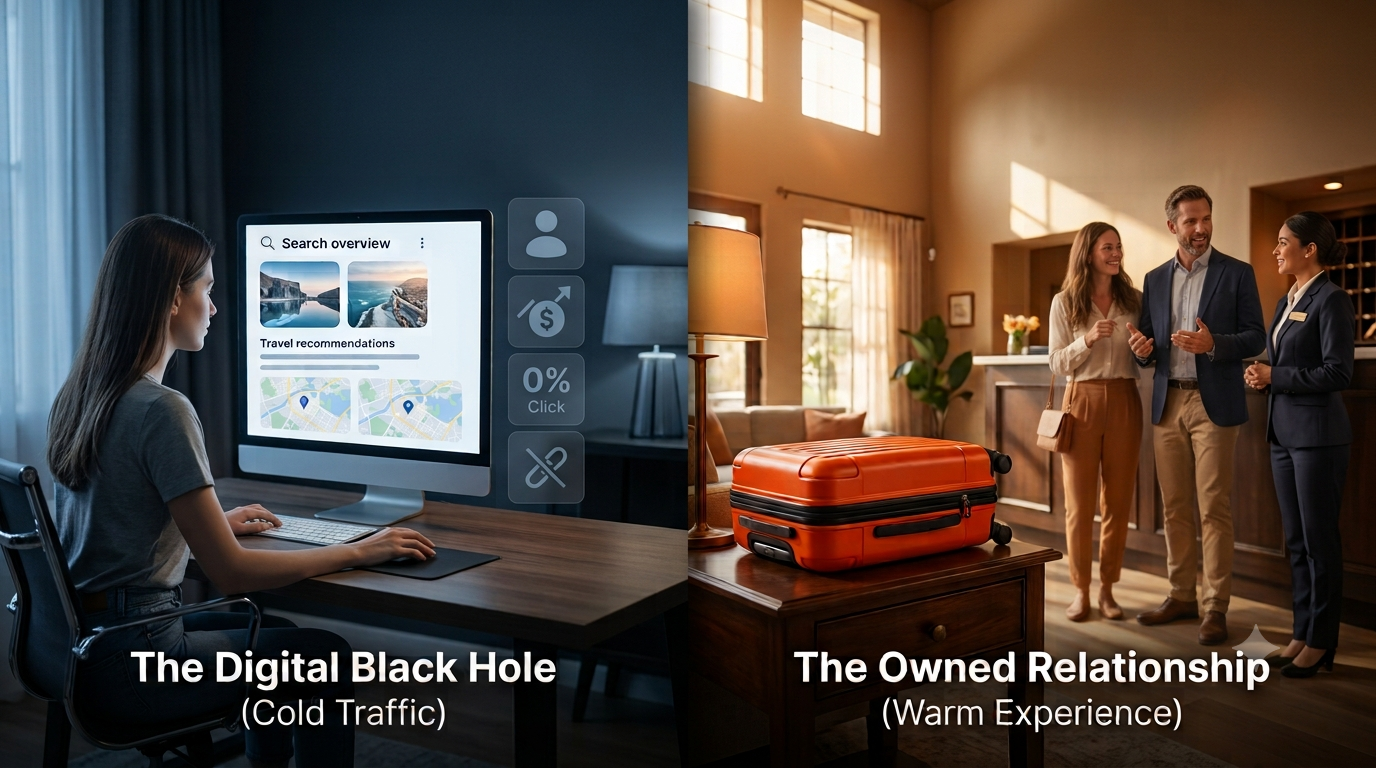
A guest booked her stay three months ago. From day one, you had her direct email — not a masked proxy address, hers. So instead of one overwhelming message dumped on her right before arrival, you spaced things out: local recommendations two months out, room details a few weeks later, transfer logistics as the date got close. Because automated sequences like these land when guest excitement is high, it's normal to see open rates hit 56% or higher — nearly double the open rates of standard broadcast marketing blasts. She was actually reading what you sent.
Somewhere in that sequence, she handed over her mobile number too. It felt natural — you'd already earned her trust over time. So when a maintenance issue came up on her room, you didn't scramble. You reached out directly, sorted it out, and upgraded her room before she ever stepped on a plane. She never even felt the bump. What could have been a public nightmare became the exact reason she tells her friends about your property.
None of that happened by luck. It happened because you had her direct email 90 days before she ever set foot in your lobby.
{{ad-two}}
The Vision: What Early Connection Actually Unlocks
When you capture a guest's real email 30, 60, or 90 days out, you get a channel most hotels never build:
* Time to build trust gradually. High-value travelers plan long-haul trips months in advance. Early contact lets you share the right information at the right moment instead of dumping it all at once — and lets you collect a mobile number naturally along the way for real-time updates on arrival day.
* An audience that's actually paying attention. Revinate's benchmark reports show automated, event-driven emails routinely pull 56%+ open rates, far outperforming full-list blasts, because guests actively want details about their upcoming stay.
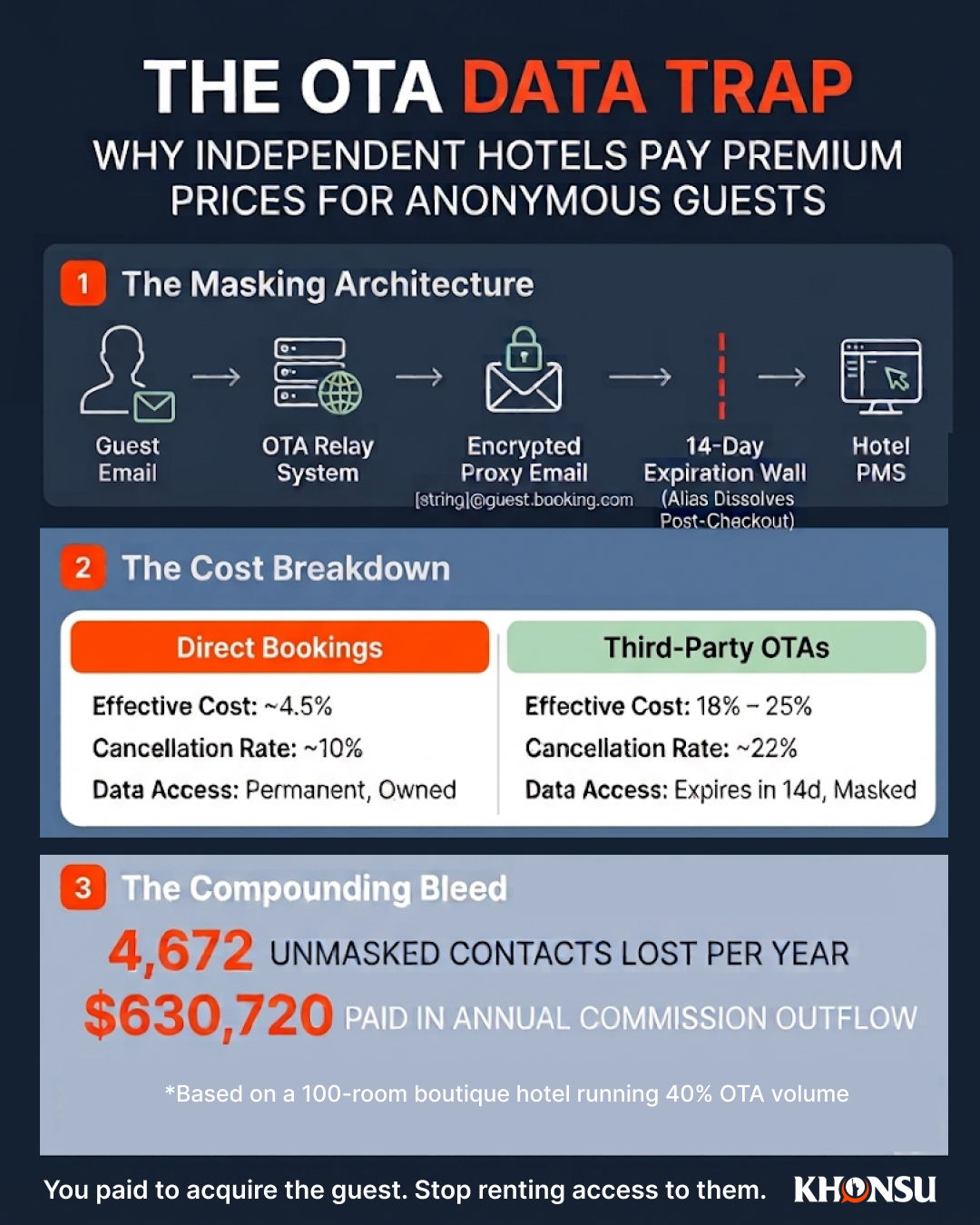
* A direct line, with no middleman. You're not routing through an OTA proxy or a third-party portal. Whatever you send lands directly in the guest's own inbox.
{{ad-one}}
What Happens Without It
Now picture the opposite.
A traveler recently shared what happened to her: she booked months in advance, drove three and a half hours, then took a 30-minute water taxi to reach a remote island property in Panama. She stood on the dock waiting for the hotel's shuttle boat. It never came.
The hotel had emailed her travel agency at the last minute to cancel the booking. The agency never passed the message along. She was stranded on a dock in a foreign country, hours from anywhere, with no idea her reservation no longer existed.
Industry research shows that up to 96% of unhappy customers never complain directly to on-site staff — they simply walk away in silence. She didn't have a direct line to resolve it, so she left a public, honest review online. Future guests read it. And there was nothing the hotel could do to reach her, explain, or make it right — because they never had a direct line to her in the first place.
The Takeaway: Harnessing the Service Recovery Paradox
Capturing a guest's real email 30 to 90 days before arrival isn't just a marketing tactic — it's an operational insurance policy. Hospitality leaders often point to the Service Recovery Paradox: the well-documented phenomenon where a guest who experiences a service failure and sees it handled brilliantly can end up even more loyal than if the stay had gone completely smoothly.
Handling a mishap gracefully doesn't just fix a problem — it builds deep, lasting trust. But you can't deliver that level of recovery if you can't reach the guest in the first place. Owning that direct line months in advance is the difference between quietly turning an operational glitch into lifelong loyalty, and finding out about a disaster the same way the rest of the internet does — after it's already too late to fix.
The hotels we work with unmask guests' emails pre-arrival without adding apps or labor — allowing them to strengthen guest relationships.
{{ad-three}}
Khonsu turns hotels' static "what to do" content into custom digital destination guides for travelers, while providing independent hotels with a pre-arrival platform to strengthen guest relationships and reduce OTA dependency.

We'll Be In Touch Within 24 Hours