How to Prevent OTA Reservation Sync Errors From Causing 1-Star Reviews

Anatomy of a 1-Star Review Series
How to Prevent OTA Reservation Sync Errors From Causing 1-Star Reviews
A returning guest. A confirmed booking. A sold-out weekend. And a reservation that vanished without a trace. Here's the operational breakdown behind a real 1-star review — and how it could have been prevented.
{{ad-three}}
In the hospitality industry, a 1-star review is rarely the whole story. Behind every negative review is a well-trained team and a system that failed them. These are their stories.
All reviews are real. Names and locations are masked to protect privacy.
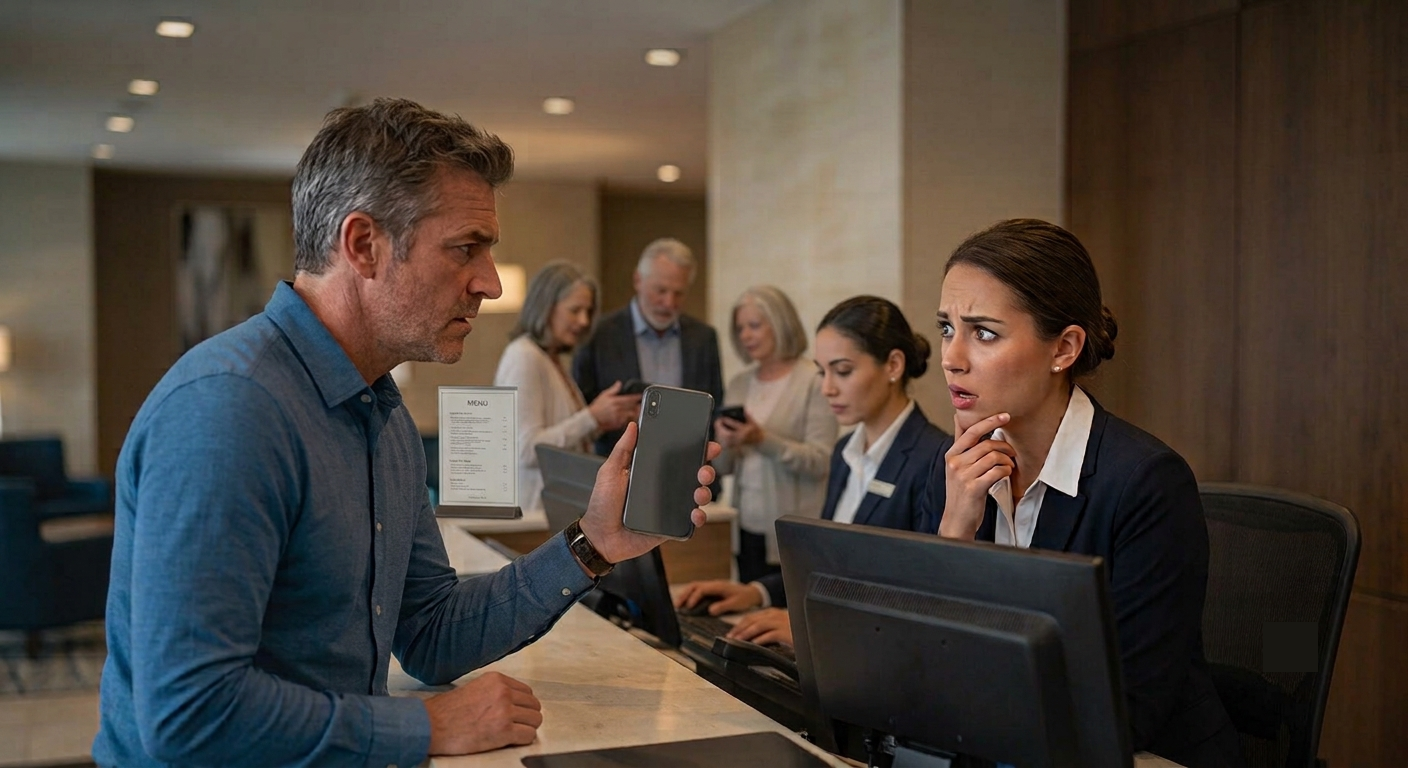
“You gotta be joking. This is my son’s graduation weekend”
The front desk agent was typing something on her computer.
"I have my confirmation right here." the guest added
He held up his phone. The reservation was on screen — dates, room type, confirmation number. Everything.
"I'm sorry sir. I don't see anything under your name." she finally shared the news lingering in the air.
The confirmation was real but the reservation wasn't there.
Autopsy
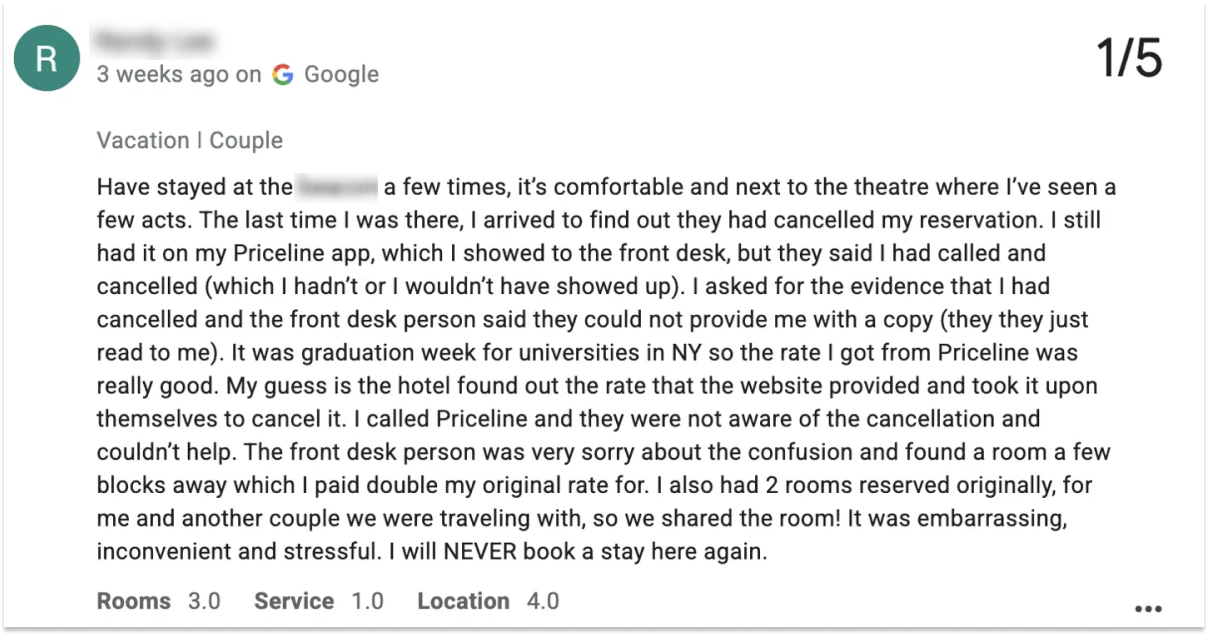
To the guest, this was betrayal. A hotel that found a better rate and quietly moved him out of the way.
To anyone who's worked in hotel operations, something else is immediately obvious.
Nobody cancelled that reservation on purpose. Nobody made that call.
Here's the layers that led to this moment.
Layer 1 — The Phantom Cancellation
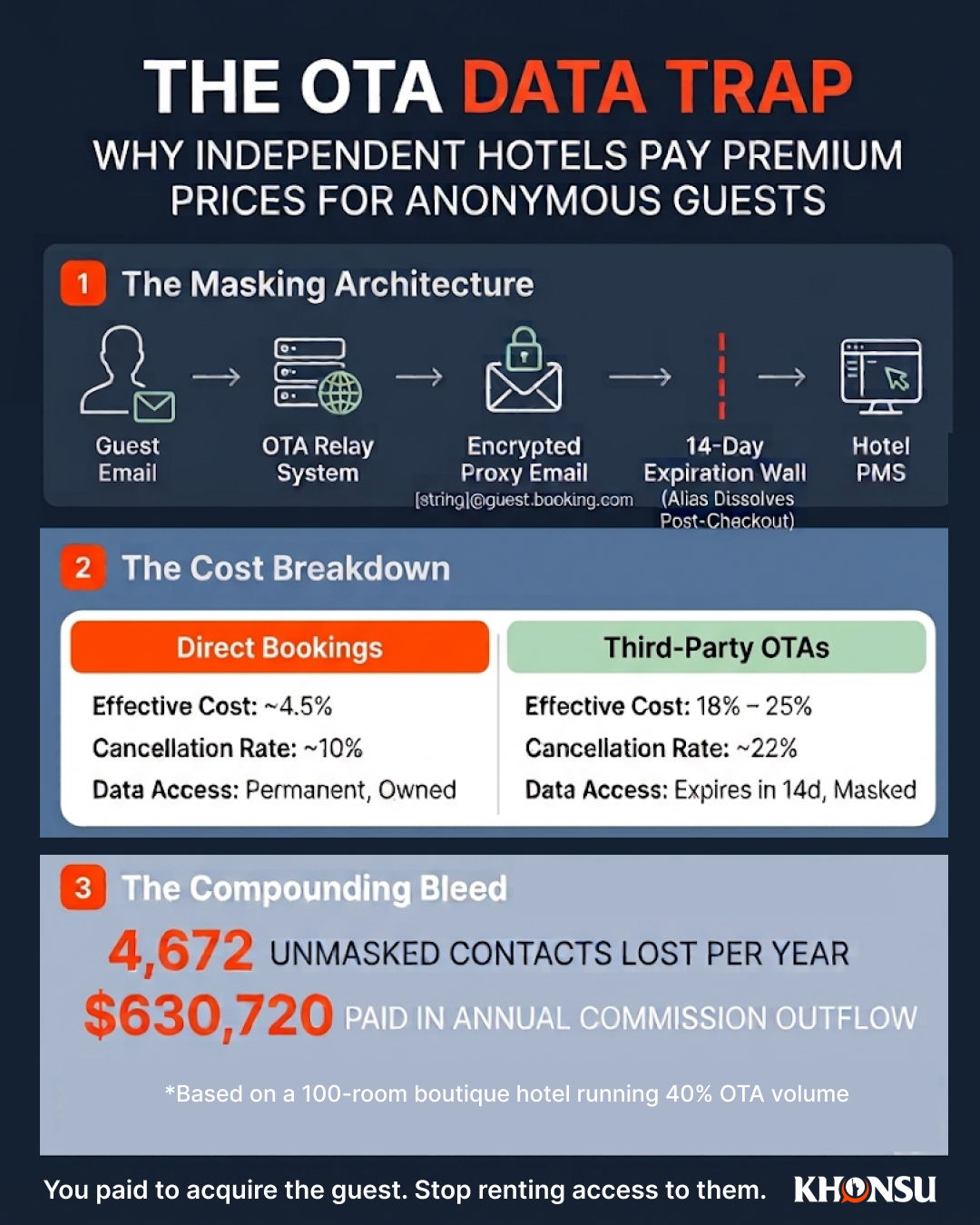
Between the OTA platform and a hotel's Property Management System, there is a data bridge that syncs reservation information in both directions. Hundreds of times a day, quietly, automatically.
Most of the time it works perfectly. Nobody notices. Nobody is supposed to.
But occasionally — during high-volume periods, after system updates, or when a rate plan triggers an automated rule — the sync misfires. A reservation that is fully active on the OTA's side gets flagged as cancelled inside the hotel's PMS. No human decision was made. No button was pressed. The system did what it was programmed to do. It was just wrong.
The front desk team had no reason to question it. The PMS said cancelled. As far as they knew, that was the truth.
{{ad-two}}
Layer 2 — The Proxy Wall Silencer
When the cancellation fired inside the PMS, an automated notice almost certainly went out. That's what these systems do — a status change triggers a notification.
But it went to the only email address on file:
x97df2la@priceline.com
This isn't the guest's real email address. It's a temporary alias generated by the OTA at the moment of booking — a digital placeholder that routes communication through the platform's relay system. The OTA owns it. The hotel just uses it.
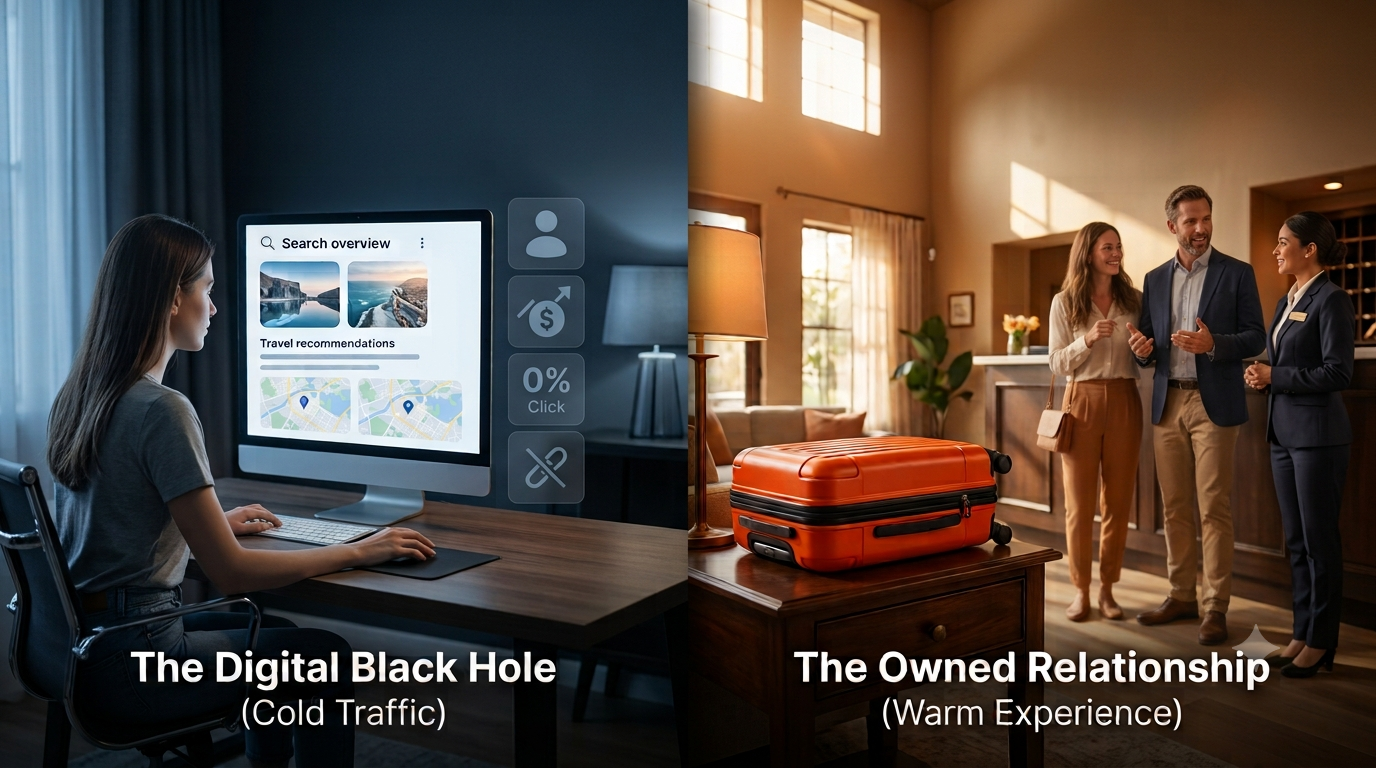
And that's the point. Up until now, the OTA owns the relationship. The hotel hasn't had a chance to provide value to the guest, so the guest has never had a reason to hand over their real contact information. The alias is all there is.
When the cancellation notice hit that proxy, it never reached him. OTA relay systems are built to forward guest communications — but they actively filter operational and third-party links to protect their platform. A cancellation notice triggered by a hotel's PMS, not the OTA's own system, can fall into that gap.
The guest had no idea his reservation was gone. He found out at the front desk.
Layer 3 — The Trust Vacuum
With no direct relationship, no real email address, and no mechanism to proactively identify the discrepancy, the hotel had no way to catch this before it became a lobby confrontation.
But the financial damage here runs deeper than one lost booking.
The True Cost of a Public Lobby Confrontation:
* The Broken Trust: The guest vouched for your property to close friends, meaning your operational failure became their personal embarrassment.
* The Exponential Loss: You didn't just lose one repeat traveler; you lost the two new couples they brought with them.
* The Public Record: The review wasn't just a complaint—it was the guest publicly correcting the record to protect their own reputation as a travel recommender.
And the hotel killed that relationship at the exact moment it mattered most — in front of the very people he'd been selling it to for weeks. The embarrassment wasn't just personal. It was public, immediate, and irreversible.
When he sat down to write that review, he wasn't just venting. He was correcting the record with everyone who might have taken his recommendation seriously.
The hotel didn't cause this. The system did. But the system left the team with nothing to fight back with — and no way to warn the guests who trusted them most.
{{ad-one}}
The Preventative Medicine
This wasn't an unavoidable disaster. It was a communication failure with a very specific point of intervention.
The sync error between the OTA and the hotel's PMS is a known industry problem. It will happen again. But what determines whether it becomes a lobby confrontation or a quiet fix is addressable and preventable if the hotel had a real relationship with the guest before it occurred.
Fail-safe 1 — The Real Email
If the hotel had the guest's email address before he arrived, they could have reached him the moment the system error surfaced. The cancellation notice would have landed in his actual inbox — not an OTA relay. He would have called. The hotel would have fixed it before graduation weekend, before the sold-out city, before the lobby confrontation in front of his friends.
But to get a guest's real email, the hotel has to earn it. That means providing something of genuine value before the guest ever checks in. A reason to engage. A reason to hand over real contact information willingly.
That's what Khonsu helps hotels do.
Fail-safe 2 — The Relationship Signal
A guest who has already connected with the hotel before arrival — who has received something useful, something personal — picks up the phone when an unknown number calls. They respond to an email from the property. The relationship exists before the crisis hits.
Without it, the hotel is a stranger calling about a problem the guest didn't know they had.
Closed Case
This hotel lost more than one booking. They lost a returning guest, a referral, and the trust of two couples who came specifically because someone vouched for them.
And they lost potential new bookings as people look at reviews before making a new reservation.
The OTA didn't cause the sync error. But the OTA's system made it impossible to catch in time — and impossible to explain when it mattered most.
One direct relationship, built three weeks earlier, changes everything.
Khonsu unmasks guests' emails pre-arrival without adding apps or labor, removing this issue from your hotel entirely.
{{ad-three}}

We'll Be In Touch Within 24 Hours
.png)